Retaining walls and slopes can collapse
Slopes and retaining walls are common features of properties in New Zealand. You may have some on your property or near your home. Storms, floods, and earthquakes can produce landslides, causing sloped land and retaining walls to collapse and cause damage.
Like any part of your house or property, retaining walls and some slopes need to be maintained. It’s important you know the condition of these features of your property, and what might happen if they were to collapse.
Could it damage your home, or pose a threat to you or your family’s safety? Taking action before an event can help prevent more severe damage.
Slopes and retaining walls on property boundaries
Features like retaining walls that are designed to protect your property can impact your neighbour’s land if they fail. It’s important to check shared boundaries and discuss the risk, and insurance with your neighbours.
If these features are your neighbour’s responsibility to maintain, they could still impact you. If you’re unsure whether a retaining wall is on your property or your neighbour’s, you can check with your local council.
Insurance might not fully cover repair costs
The natural hazards insurance scheme includes some cover for land. But land repair can be costly, and often, what you receive won’t cover the full cost of the repairing your land. You’ll need to pay the difference in the cost.
It’s important to take time to read about land cover, and how you might be affected if your property is damaged in a natural hazard.
Private insurers don’t provide extra cover for land. You may be able to insure your retaining walls through your private insurer. It’s worth asking them to find out if they do.
Make your slopes safer
If you have slopes on or near your property, you need to understand what risk they might pose in heavy rain or an earthquake.
You should consider how the collapse of a retaining wall or a landslide might affect surrounding buildings and structures. That includes neighbouring property.
Risks to buildings and people are important, but you should take some time to check all the slopes on your property.
Slopes with the following characteristics could be at risk of damage from natural hazards:
- Surface material that is soft or loose and easily dislodged, like loose fill used to level a slope that isn’t held in place with a retaining wall).
- Steep slopes that are hard to walk up (more than 35 degrees) that are made of mostly of soil.
- Steep slopes (more than 35 degrees) that have be altered or cut into, or have had plants removed.
- Where landslides have happened in the past (check the Natural Hazards Portal for previous claims, ask neighbours or the local council)
- Rock slopes that are fractured or crumbling.
If land near or supporting your home is moving, there may also be warning signs around the building.
Regularly check for:
- doors or windows no longer closing easily
- changes to the level of floors
- outside steps pulling away from the building, or
- diagonal cracks in external plaster, brickwork, solid walls or foundations.
Talk to your local council or a qualified engineer if you have concerns about the stability of a slope or you want to make some changes.
Find a local engineer(external link)
Protect slopes from collapse
You have options to make slopes on your property more resilient to natural hazards like landslides. The options available to you range in effort and cost.
Some actions you could consider are:
- adding additional drainage to a slope
- planting out slopes to help draw out excess moisture and add stability
- keeping heavy mobile objects (such as cars) away from the top of unstable slopes
- reducing the slope’s grade or building retaining walls, which will usually involve hiring a professional.
Before starting any major earthworks, you should get advice from a qualified engineer. A professional will make sure any work that’s required meets the standard and is appropriate for your property.
Maintain your retaining walls
If you have retaining walls on your property, it’s important to regularly check and maintain them.
Some retaining walls play only a minor role on your property, while others support or protect your land, home and buildings, or neighbouring land. If these fail, this can cause significant damage to surrounding property.
If you have any concerns or need work done, talk to a licensed building practitioner or engineer.
Find a local engineer(external link)
Check the condition of your retaining walls
It’s important to monitor and maintain your retaining walls to reduce the risk of a slip or wall collapse. Taking regular photos can be a good way to identify any movement or changes in your wall over time.
You should also check that retaining walls on your property are well constructed and fit-for-purpose. Older walls may have been built before there were Building Code requirements or might have weakened over time. Walls with construction issues such as poor drainage, tall and widely spaced posts, and non-durable materials, will be at a greater risk of failure.
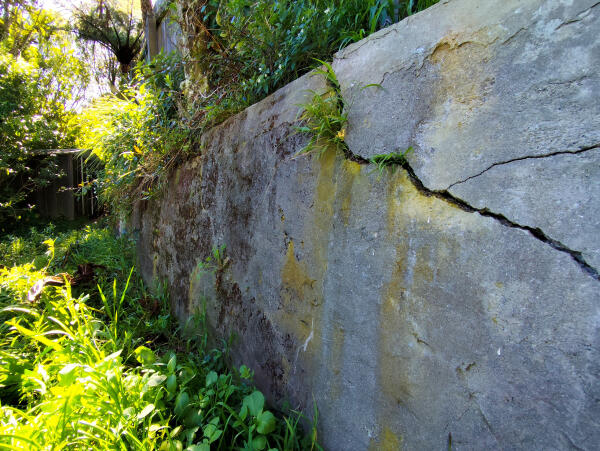
A concrete retaining wall with cracking and bulging – which are both warning signs of movement.
Preserve and strengthen retaining walls
You should include retaining walls in your regular home maintenance. There are some maintenance tasks you can do yourself, but some will require a professional. Options include:
- adding additional drainage so that soil behind the wall does not become saturated and heavy
- clearing weep holes at the base of a retaining wall to allow water to drain
- strengthen the wall by adding additional posts or anchor bolts
- reducing the load on the wall by moving heavy objects, like vehicles, away from the top
- building a new wall in front of an existing one if it is below standard or distressed.
Talk to your local council about what you need to do to meet Building Code requirements and whether you need a building consent before making any changes. You may also need an engineer’s report.
Next steps
Get familiar with your cover
Find out more about natural hazards insurance for your home and land.
Find an engineer
Talk to a qualified engineer if you have concerns about the stability of a slope, or you want to make some changes.
Talk to your local council
Ask your local council for information about existing or new retaining walls.