Homes on slopes can have foundations that are taller at one end which can result in twisting during an earthquake.
Any home built on unstable soil may be prone to foundations moving in an earthquake or shift gradually over time.
Create a safer home for your whānau by taking action if something doesn’t look right.
Foundation types behave differently
Older homes with suspended timber floors can be more at risk of damage, especially where foundations lack bracing or have deteriorated. Rot, borer, and weak connections can lead to cracking, sinking or twisting in an earthquake, flood, or landslide.
Get familiar with your foundation type
Your home will likely have one of these foundation types:
1. Suspended floor – a raised floor with space to crawl underneath, supported on piles, with either open foundations or a concrete perimeter wall.
3. Mixed – for example pile foundations with a concrete slab foundation extension.
2. Concrete slab – as the slab sits directly on the ground, there are fewer things you can do yourself to check its condition, stability and strength.
If your house has a mixed foundation type, it may perform differently in a natural hazard event. That's because the two parts of the house might move in different ways and the connection between the two foundations may be weaker than a single foundation.
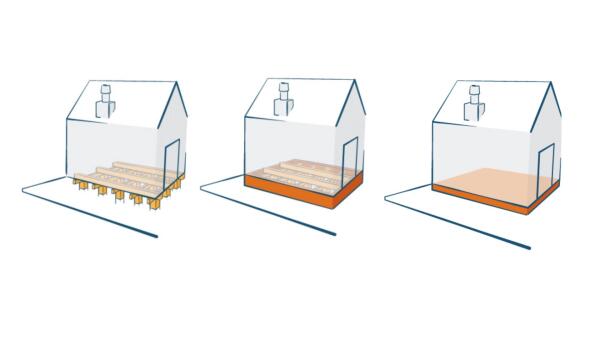
Foundation types, from left to right: Suspended, mixed, and concrete slab.
Simple checks around the house
These warning signs around your home can point to a potential issue with your foundations. You should take photos if you notice any of these issues.
Inside the house
Look inside your home and pay attention to signs of movement or damage. You should look at the ceilings and walls for any cracks or gaps. Inspect doors and windows to make sure they open and close smoothly without sticking – noting that older timber joinery can swell or shrink with seasonal conditions.
A sloping or uneven floor could indicate movement in the foundations. You should also check the floor coverings for:
- ceramic tiles that are cracked or uneven
- carpets or vinyl that is stretched or loose in places
- timber floorboards with signs of rot or borer.
Outside the house
Walk around the outside of your home and look carefully at the walls, and the areas where the house meets the ground.
Check for:
- walls that are cracked or crumbling
- exposed piles that may be loose or damaged
- cladding with signs of damage, like rot or borer.
Water damage, ponding, or soil that has moved can also be a sign of a foundation issue. Look for soil that has sunk or slumped away from the foundation.
Inspect the piles under your house
If your house has a suspended floor foundation, you may be able to check the piles under your house. Don't go under the house if you think the foundations have weakened, are unstable, or if there may be a risk to your safety.
Before going under your house, ensure it’s safe by turning off power and gas if needed, have someone watching, and wear protective gear.
If you can get under your house, check piles for their condition, how they’re connected, and their bracing.
Do the piles show signs of damage or deterioration?
Signs of piles in bad condition are:
- piles on a tilt or not standing upright
- piles unevenly supporting the bearers, possibly with gaps
- timber piles, bearers and joists showing signs of rot or borer
- concrete piles showing signs of cracking or crumbling
- piles exposed by ground excavation or soil slips
- where piles are missing, or other objects have been used to support joists or bearers
- a lack of diagonal bracing for taller subfloors.
Piles should be firmly embedded in the soil without gaps around their bases. Piles that are damaged, misaligned or missing need to be repaired or replaced. We don’t recommend you attempt to do this work yourself.
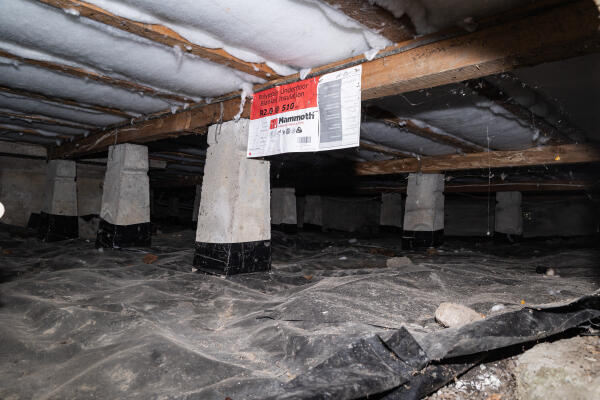
An example of suspended floor foundations with concrete foundation piles. Here you can clearly see the wire connections securing the wooden bearers to the concrete piles.
Is the house properly connected to its piles?
Piles that are correctly connected to bearers will help minimise movement and damage during a natural hazard event.
Check that connections such as nails and screws are not loose, rusted, broken or missing between:
- bearers and piles
- bearers and joists.
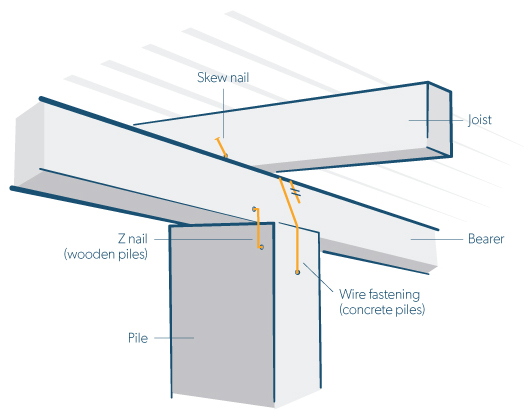
Different parts and fastenings of a suspended floor foundation.
Are the piles supported by bracing?
Houses with tall piles need lateral support to prevent them tilting in an earthquake. Bracing can provide the piles with support. Get advice on bracing from a licensed building practitioner or engineer, particularly if your home has either:
- a concrete perimeter foundation wall that is not continuous
- a subfloor more than 600mm above ground (especially one with pole foundations).
A qualified engineer can help you design a bracing solution for your house. Installing bracing is a job for a licensed building practitioner.
If your house has bracing, you can complete a basic bracing review by checking that:
- any tall timber framing in the sub-floor is still adequately connected to the foundation wall below, and not damaged
- any fasteners are in good condition (not loose, rusty, broken or missing)
- if you have a concrete perimeter foundation wall, there are no signs of cracking or crumbling.