Prevent leaks and damage from heavy water tanks
Your hot water cylinder is heavy and can contain hundreds of litres of hot water. If it tips over in an earthquake it can cause serious damage due to its size and weight. If water or gas pipes connected to the cylinder come loose, they can leak water and gas into your home.
Header tanks are usually found in older homes and will either be in the roof space, or on the roof. Even if it's empty, a concrete header tank can weigh a lot. If the tank moves in a quake, it can fall through or off the roof – posing a risk of damage and injury.
A secure water cylinder and header tank increases the chance of keeping the plumbing connections intact – so your whānau can stay safe and use the water after an earthquake.
Homes built after 1992 are required to have secured cylinders to comply with the Building Code. Even if you’re in a newer home, you should still check to see if your cylinder is correctly secured.
Secure a hot water cylinder yourself
If you're confident doing DIY, securing a hot water cylinder is probably a job you can take on yourself, and the equipment costs under $50.
If you know someone who might struggle with this job, you could give them a hand. If you'd like help, get in touch with a builder or plumber.
Hot water cylinders should be secured with blocks of wood (blocking) and steel restraining straps to stop the cylinder from rocking and tipping in an earthquake.
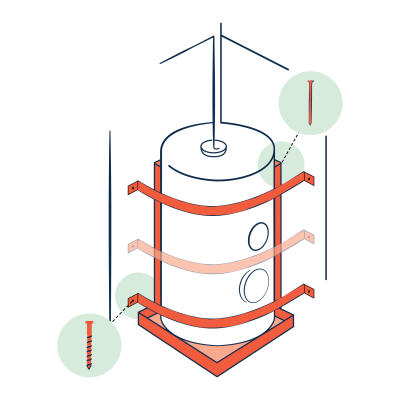 Cylinders that are 200 litres or smaller require two steel restraining straps. Extra straps are required if your cylinder is:
- larger than 200 litres
- located more than 12 metres above finished ground level
- unable to have straps positioned within 10cm of the top and bottom of the cylinder.
Installing the restraints
Attach timber blocking
- Cut and fit two vertical 50x50mm timber blocks up the full length of the cylinder.
- Attach the blocks to the wall studs and make sure they fit snugly between the wall and the cylinder or heater. A stud finder can be a helpful tool when locating wall studs.
Add the steel strapping
- Work out how many straps you need, depending on the size and location of your hot water cylinder. You’ll need at least three straps if your cylinder is larger than 200 litres.
- Decide where the straps will be fastened. They should be positioned within 10cm of the top and bottom of the cylinder, and away from the water inlet and plumbing controls.
- Screw the steel straps into a wall stud – you can use a stud finder to check. If there is no stud in the right place, fix a short piece of timber horizontally across two wall studs to give you something solid to attach the steel straps to.
- Attach the galvanised steel straps securely with screws into the wall stud.
- Use the tensioning device that comes with the steel straps to tighten the steel strap.
- Once all the straps are screwed and tightened, test the hot water cylinder is secure by gently rocking it. It should feel firm and only move slightly.
- Double check there is no strain on the water inlet pipes.
Check your header tank is secure
Header tanks feed water into a hot water cylinder, and are located in the attic, roof space, or on the roof.
Similar to your hot water cylinder – you should have a look to see if you have a header tank, and whether it’s secure.
If your tank is in use but doesn't have straps or blocking anchoring it to the ceiling joists, it's not secure and could cause damage if it moves in earthquake shaking. Talk to a licensed building professional about how to add proper blocking.
Even empty header tanks are extremely heavy. If your tank is no longer in use, the safest option is to completely remove it and you should talk to a licensed building practitioner about the best way to do this. If you can't remove it, securing it with straps means it's less likely to move around in earthquake shaking.
How to restrain an empty header tank
Follow these instructions to secure a header tank that is no longer in use, or talk to a licensed building professional.
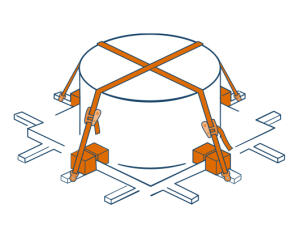 Follow these instructions:
- Securely nail wooden blocks at four locations around the perimeter of the tank’s tray and fit wooden blocks between the tray and the tank.
- Place tiedown straps across the tank to secure it to the roof framing.
Turning off water mains after a quake
You've now reduced the risk of your cylinder breaking away from its water or gas lines. But in an earthquake, there's a risk those services could rupture in other places.
As an important safety measure, know how to turn off your water and gas mains as quickly as you can after a quake.