Falling furniture is a hazard
During an earthquake, heavy or unsecured furniture can tip, slide or fall, causing damage or injury.
When furniture is safely secured, you’re less likely to be injured or trapped, and you’ll have a clearer, safer area to Drop, Cover and Hold during a quake.
If you’re renting, your landlord must allow you to make minor changes to secure furniture, like anchoring tall and heavy items to the wall. You’ll be required to return the property to its original condition before you leave. Make sure you discuss any changes you want to make with your landlord first.
Securing furniture and valuables is generally something you can do yourself. If you’re unsure where to start or unable to do this yourself, ask for help from friends, whānau, or neighbours. And if you know someone who may struggle with this, offer to give them a hand.
Anchor bookshelves, cabinets and whiteware
To stop tall or heavy items from falling you should secure them to the wall studs. This can be done with specialist straps, or with metal angle brackets and screws.
Specialist straps that attach to the furniture with a sticky tape are a great option for whiteware such as your fridge, or for furniture you would rather not drill into.
When attaching brackets, you can hide them from view by attaching them as two upside-down Ls, with the bracket arm facing downwards against the wall.
Follow these steps
- Mark the wall where the top of the furniture comes to.
- Move the furniture from the wall.
- Find the studs in the wall by using an electronic stud finder or by tapping lightly and listening for the duller sound of the stud.
- Drill pilot holes into the wall stud for your screws. Take care when drilling to avoid electrical wiring that might be in the wall space.
- Using the 63mm 12-gauge timber screws, screw the brackets/straps into the pilot holes you just created.
- Move the furniture back to the wall and align it with the brackets/straps.
- For brackets, use 15-25mm 8-gauge timber screws and screw the top arm of the bracket down into the furniture.
- For straps, peel the backing off the tape and attach to the top of the furniture.
Secure your TV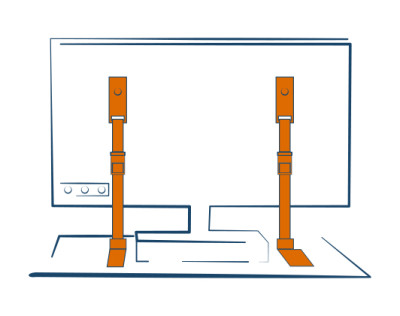
To keep your small children safe from your television falling over in an earthquake, it should be secured to a solid surface.
Mounting your TV to the wall is the most secure option. You can buy a mounting kit that fits the size and weight of your TV from your local hardware store.
If you can’t mount your TV to the wall, an alternative option is to place a non-slip mat under the TV and use straps to secure it to the cabinet it sits on, or the wall studs behind. Find specialist TV restraint straps at a hardware store and follow the instructions.
Quick ways to secure smaller items
Even everyday objects can become hazards during an earthquake and can break or cause injury if not properly secured.
We’re also guessing some smaller items around your home have sentimental value, like ornaments, memorabilia from a special day, or something you’ve been gifted.
These quick fixes can protect smaller valuables and save you a big clean up after a quake.
Hang picture frames and mirrors with secure hooks
Picture frames hung on a single nail or thumbtack can easily fall off the wall during earthquake shaking. You should use secure fastenings and strong cord on the back to prevent them being damaged or causing injury in a quake.
You can either use normal picture hooks and push the clasp closed against the string, or you can buy hooks that have a built-in latch (you don’t have to push the clasp closed on these, it happens automatically).
The hooks you use depend on the size and weight of the item: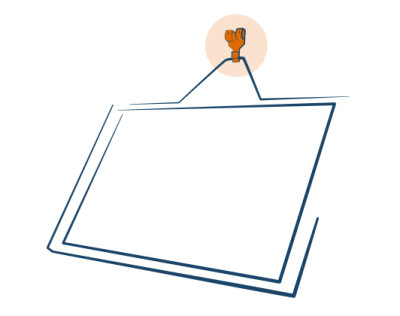
- For lightweight frames you can use conventional single-nail picture hooks nailed into a wall stud, or adhesive velcro strips (like Command Picture hooks).
- Heavier frames will need one or more sturdy closed picture hooks with multiple nails.
- Very heavy items like mirrors or large artwork might need something more secure.
Place heavy items low down
Falling objects can be dangerous during an earthquake. Move heavy or fragile items to shelves or cupboards lower down.
Secure shelf items and cupboard doors
Easy ways to protect shelf items include: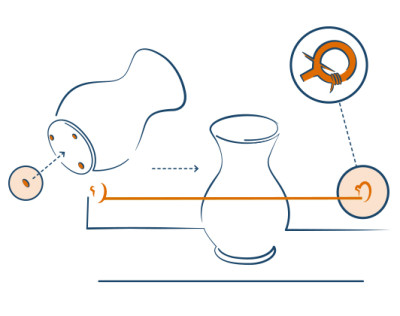
- sticking Blu Tack or quake wax to the base of fragile ornaments or precious objects to help keep them in place
- adding latches to cupboards or drawers (we recommend child-proof latches)
- installing string cord, nylon or curtain wire in front of books and other items on a shelf.