Shaping safer land‑use in the Taupō volcanic zone
In the Central North Island, iwi, hapū, landowners and businesses are making big decisions about how land is used and cared for in the Taupō Volcanic Zone.
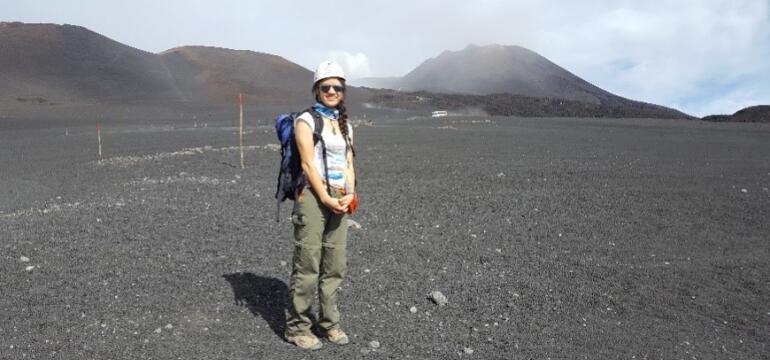
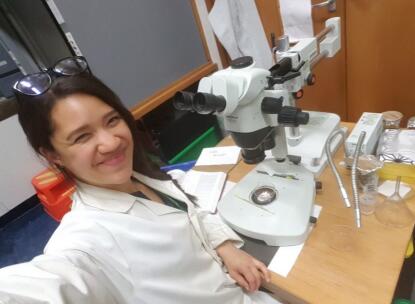
Dr Kate Mauriohooho is a volcanologist and NHC Toka Tū Ake-funded postdoctoral researcher at Massey University. Her work sits at the intersection of volcanic risk, land-use planning and mātauranga Māori.
Over the next two years, Kate is working alongside iwi and taiao teams to help define what “good engagement” looks like in active volcanic regions – and how that engagement can support smarter, more resilient land-use and natural resource management before the next event.
 Rather than treating resilience as a stand-alone box to tick, the goal is to build real-world pathways that reflect local aspirations: strengthening relationships, supporting decision-making, and exploring land-use options that can better withstand disruption and support recovery if volcanic activity impacts the region.
Kate’s work will contribute to a best-practice guide for scientists and land managers, focused on engagement that is grounded in tikanga, Te Tiriti principles, and practical on-the-ground realities.
Outside of her mahi, Kate represents one of her hapū at Maungatautari Sanctuary, loves spending time in the taiao and ngāhere, and is especially drawn to native birds. She also values deepening her understanding of whakapapa through mātauranga Māori and Te Ao Māori – a lens she brings to her science, too.
Read Kate’s Q&A below to learn what sparked her love of volcanoes, why she believes preparation matters, and the moments in the field that have stayed with her.
What sparked your interest in studying natural hazards?
 Rocks. I was always fascinated by rocks. My kuia (grandma) had a collection of rocks, and a fossilised anga (shell) and I could never figure out why I couldn’t eat it. When I was 7, a school trip to Rangitoto sparked my interest in volcanoes and I tried to turn lava back into magma by putting scoria in the oven as it was the hottest thing I knew.
As a kid I also saw Ruapehu erupt. My favourite movie was Jurassic Park which got me interested in dinosaurs and rocks.
Why is it important to invest in natural hazards research like yours?
Preparation. Preparation alleviates uncertainty and provides the highest level of comfort, as you have now done everything you possibly can. Whatever happens now is out of your control.
What are some simple, evidence-based actions that people can take to improve their resilience to natural hazards?
 Always have a ‘go-kit’ prepared for emergencies and check it once a year. Put in batteries, fire starter, head torches, emergency blankets, non-perishable foods. Also stock fresh water on your property, even if you live in the city. I have a go-kit ready myself, it’s a pack, with camping gear non-perishable foods, fire starter, head torches and also stock 10L of water in the garage just in case.
Keep trying to remind yourself that you can always rebuild as long as you still have your family, pets, livestock.
What’s one finding from your research that you wish more people knew about?
Volcanoes have, shall we say, personalities. For example, you might get a volcanic phenomena that occurs at one volcano, but less so at another. This is based on its composition, eruption style, tectonic setting and what we know of its past eruptive behaviour.
For example, lahars are frequent at Ruapehu, but not at Taupō volcano. Also, many volcanoes display several or more volcanic phenomena in their lifetime, not just one that they are characterised, or known by.
Supereruptions don’t necessarily consume all magma systems in the crust, there can be other a smaller independent magma system still present in the crust, post supereruption. The thermal flux required to turn up the dial on the volume and VEI of eruptions, is able to migrate through time. This is particularly associated with large silicic volcanism in caldera settings.
Magma systems evolve over time, but inherit isotopic signatures from the large crustal terranes at depth they originate from and accumulate in.
What is a misconception related to your research/field that you want to clear up?
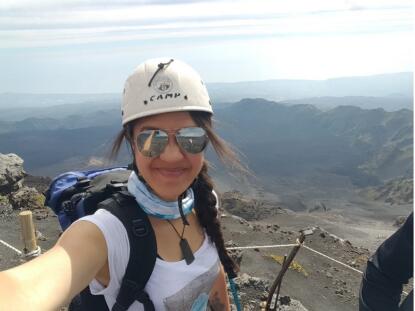 That being a volcanologist is inherently dangerous. There are less than 2000 people around the world studying volcanoes and most of them have to get close to a volcano from time to time, but only 31 have been killed on the job in 60 years. Although the job does require working in extreme, unpredictable environments that carry high risks of injury or death.
The reality is that most volcanologists, especially those studying actively erupting volcanoes, take safety very seriously, are extremely careful when on a volcano and will not work in an area they think is too dangerous. Because of this the number of volcanologists killed in the line of duty is very low.
Do you have a favourite anecdote or memory related to your research?
I was eating scrambled eggs for breakfast outside my accommodation in Guatemala. I didn’t remember putting black pepper on my eggs. Then I realised it was black ash from the nearby erupting volcano falling on my eggs.
What advice do you have for people who are interested in working with you/within your field?
Stay curious about the world around you.