First-ever study reveals scale of volcanic gas risk in Auckland
Auckland’s volcanoes have released tens of thousands of kilotonnes of gas in past eruptions – and new research is helping scientists understand what that could mean for the city’s future.
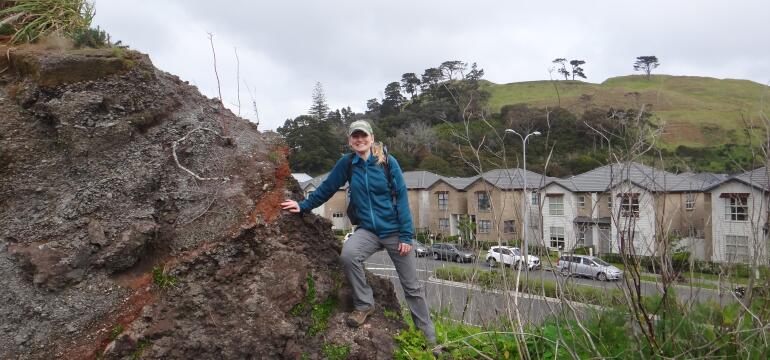
The study, funded by the Natural Hazards Commission Toka Tū Ake (NHC) and Auckland Council, is the first to estimate volcanic gas emissions from the Auckland Volcanic Field (AVF), filling a critical gap in hazard modelling and emergency planning.
Volcanic gases – particularly sulphur dioxide (SO₂) and carbon dioxide (CO₂) – can pose serious risks to people, infrastructure and the environment. SO₂ can irritate airways and corrode materials, while high concentrations of CO₂ can cause suffocation.
“Gas is a significant but under-recognised hazard in Auckland,” says lead author Elaine Smid from the University of Auckland.
“Until now, we haven’t had local data to understand how much gas could be released in an eruption, or what that might mean in practice.”
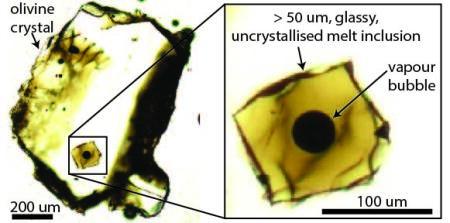 Because Auckland has not erupted in the modern monitoring era, researchers turned to the past – analysing ash and rock fragments from five previous eruptions, including Rangitoto.
By comparing gas trapped deep within magma crystals to that in rapidly cooled volcanic glass, they estimated how much gas was released during eruptions.
The results show that over the past 200,000 years, the AVF has emitted around 26,000 kilotonnes of CO₂ and 9,000 kilotonnes of SO₂.
But this alone doesn’t tell the full story.
“The speed of release is what really drives impact,” says Smid. “The same amount of gas released over a few hours versus several months would produce very different consequences.”
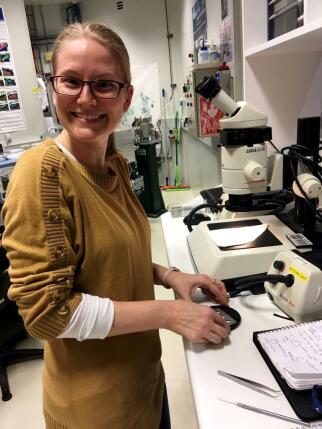 To better understand those impacts, researchers applied their findings to existing Auckland eruption scenarios used by scientists and emergency managers.
“This is the first time we’ve been able to plug Auckland-specific gas data into these models,” Smid says. “It gives us a much clearer picture of how gas hazards could play out across the city under different conditions.”
While gas monitoring is widely used overseas as an early warning signal, its role in Auckland is still emerging.
“We don’t yet know whether gas would be released before magma, how concentrated it could be, or how much warning it might provide – but that’s exactly what ongoing research is working to answer.”
NHC Chief Resilience Officer Jo Horrocks says the research marks a step change in understanding.
“This is about lifting the lid on a hazard we’re only just beginning to understand. It will directly improve how we model, plan for and respond to future eruptions.
“The likelihood of an eruption in Auckland remains low – about 10% over the next 50 years. What this research does is help us better understand the potential impacts, so we can be better prepared.”