Data, data everywhere, how can AI make it more useful?
When floods and landslides happen, information surrounding the events is often messy and scattered – but new creative uses of AI can help make sense of the data.
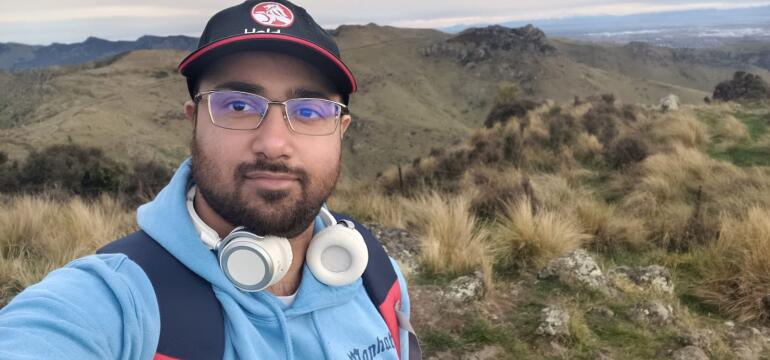
NHC Toka Tū Ake is funding three students who are using AI to turn real-world hazard information following flooding and landslides into data that answers practical questions like: what happened, where, who is affected?
The students are interns at CRISiSLab – a transdisciplinary research lab based at Massey University’s Joint Centre for Disaster Research, specialising in research at the intersection of technology and human behaviour.
Now in its fifth year, the CRISiSLab Internship Programme supports undergraduate and postgraduate students to develop practical, tech-enabled solutions for natural hazards resilience, helping build capability and pathways into the sector. This year, the programme is supporting 28 interns across 22 projects.
The three NHC-funded projects within the programme are:
- Using satellite and aerial imagery to build AI-ready datasets that can help detect and map flood impacts
- Applying large language models to turn open-source flood reporting into consistent, searchable evidence
- Using remote sensing (including LiDAR) to build AI-ready datasets for landslide detection and mapping.
Meet the interns
Omkar Josi – turning flood reports into searchable, reusable evidence
“During my internship, I’m researching how to build AI-ready text datasets for floods using open-source information like news and public reports.
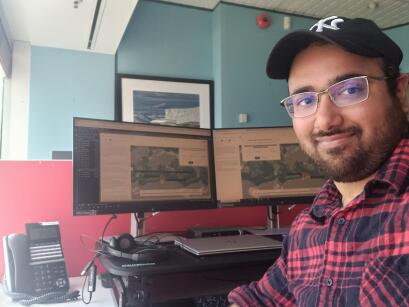 With Large Language Models, I’m extracting and standardising key details—where an event happened, when, what was impacted, and the reported consequences—so the information becomes structured, searchable, and reusable for analysis.
Flood information is often buried in unstructured reports, which makes it hard to analyse at scale. By extracting consistent details, this work can help quantify hazards and impacts, improve the visibility of evidence, and support better people-focused decisions for mitigation, response, and recovery.
What I love most is turning a messy real-world problem into something useful and measurable—transforming unstructured information into datasets others can build on to improve decision-making and resilience outcomes.”
Chanuka Pehesara – using imagery to assess flood impacts faster
“My research focuses on developing deep learning models for change detection and spatial segmentation using satellite and aerial imagery. I’m working to build AI-ready image datasets that can identify the aftermath of flood events in affected areas.
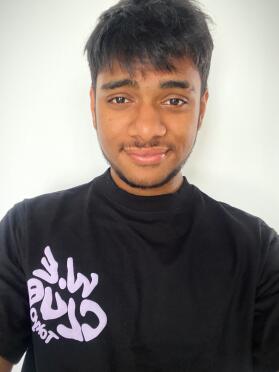 By creating high-quality labelled datasets from pre- and post-disaster images, I’m helping train algorithms to recognise flood impacts more accurately and efficiently.
The goal is to support faster, more informed decision-making after flood events. If AI tools can rapidly assess flood impacts from satellite imagery, responders can identify affected areas sooner and target resources where they’re needed most—supporting timely and effective recovery. Over time, the datasets and models will also help improve understanding of flood patterns and support smarter planning for future events.
My favourite part of being a researcher is collaboration—learning from experienced professionals and doctoral candidates, debating ideas constructively, and contributing to something bigger: practical innovation that helps protect communities.”
Charutha Unni – improving landslide detection with AI and remote sensing
“I’m applying AI and computer vision to automatically detect and monitor landslides using LiDAR terrain models, satellite imagery, and national hazard information.
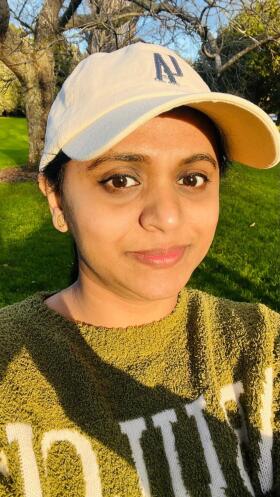 A key focus is helping create AI-ready landslide datasets to support reliable, efficient models for rapid mapping and evidence-based risk assessment.
By developing AI methods and datasets that improve how landslide hazards are identified, quantified, and communicated, the research can help provide faster, more accurate information—supporting communities and decision-makers as research is translated into planning and policy development.
What I enjoy most is creating practical solutions that make a real impact—building models that turn raw data into useful knowledge, especially when it supports safer communities and better decisions for New Zealand.”