20th anniversary Ivan Skinner award goes to Dr Robin Lee
The Natural Hazards Commission (NHC) Toka Tū Ake has awarded its 20th annual Ivan Skinner Award to geotechnical engineer Dr Robin Lee for his practical research that is helping New Zealand design safer buildings.
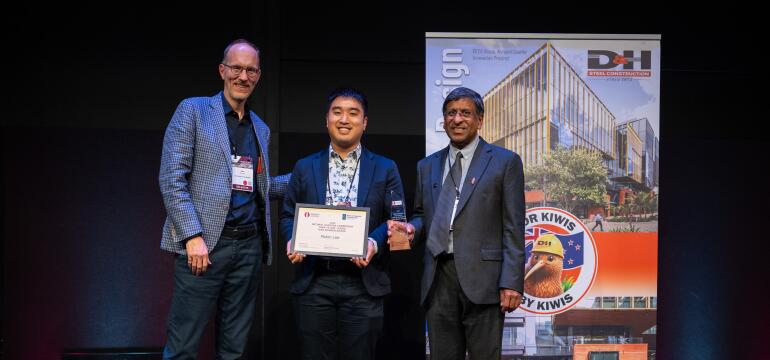
Lee is a senior lecturer at the University of Canterbury, where he studies how the layers of soil and rock underground impact the strength of earthquake shaking in different parts of the country.
Lee became fascinated by engineering seismology during the last year of his engineering degree at the University of Canterbury.
“I became really interested in understanding why earthquakes cause such different levels of shaking in different places, and how we can better predict that shaking,” he says.
He stayed at the University of Canterbury to complete a PhD. His doctoral thesis was published in three journals and earned him a prestigious Rutherford postdoctoral fellowship – one of only six awarded by the Royal Society NZ each year across all disciplines.
“What keeps me motivated is that this work has a very practical purpose in New Zealand. Better understanding earthquakes helps us design safer buildings and infrastructure, which can ultimately improve resilience and reduce risk for communities,” says Lee.
His work has informed some of the most important seismic design frameworks New Zealand uses to determine where and how to build for earthquake safety, including the National Seismic Hazard Model (2022 update) and TS 1170.5 design standard.
Lee will use the $15,000 prize to research how earthquake waves travel and become amplified beneath the complex soil structure in Wellington.
“Improving our ability to model these effects will help us better estimate future earthquake hazards, which in turn supports more reliable engineering design and stronger resilience planning for the region,” he says.
The Ivan Skinner Award is the longest running award of NHC Toka Tū Ake, launched in 2006 in honour of its Research Director and seismic engineering legend, Dr Ivan Skinner. The award has become a significant career-accelerator for New Zealand’s young engineers.
NHC Toka Tū Ake Head of Research, Natalie Balfour, says, “Past winners have said that the award has opened doors and boosted their confidence. It’s helped recipients secure funding and international collaborations and given them opportunities to share their work with a wider audience.”
The award is one way that NHC Toka Tū Ake supports work that is making New Zealand homes more resilient to earthquakes. It also funds research and modelling into New Zealand’s earthquake risk, and guidance for how to build structures that can better withstand shaking.
Balfour adds, “We’re proud to grant this award to Robin, who continues the long tradition of the New Zealand exceptionalism in earthquake engineering.”
Lee says, “The Ivan Skinner Award is one of the most respected awards in earthquake engineering in New Zealand, so receiving it is a real honour. The award has been given to many exceptional engineers and researchers over the years, so to be included among past recipients is very meaningful.
“For me, it is recognition that my research is contributing to both scientific understanding and engineering practice in New Zealand. It is also very motivating and encourages me to keep pushing forward with work that can have practical benefits for improving earthquake resilience,” adds Lee.
Feature photo, from left to right: Prof Ken Elwood (Chief Engineer NHC/MBIE), Dr Robin Lee, P Brabhaharan (NZSEE President).
20 years of Ivan Skinner Award winners
Over its 20-year history, the Ivan Skinner Award has recognised exceptional researchers whose research directly improves earthquake safety for New Zealanders. Recipients have gone on to lead influential work, developing practical and guidance tools that engineers use to design safer buildings.
Below, a few past winners share what winning the Ivan Skinner Award meant for them personally and professionally.
Dr Maxim Millen, Technical Director, Tonkin + Taylor
2025 winner
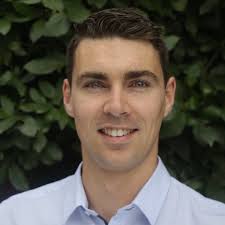 Dr Maxim Millen is a geotechnical earthquake engineer whose work helps turn complex earthquake science into practical decisions. He has led development of national-scale liquefaction risk tools and contributed to methods that influence updated engineering design approaches, helping improve how New Zealand assesses and plans for earthquake-related ground damage.
“Receiving the Ivan Skinner Award was a huge honour and gave me space and confidence to contribute to conversations that shape the future of Aotearoa’s seismic resilience."
Dr Lucas Hogan, Senior Lecturer, University of Auckland
2023 winner
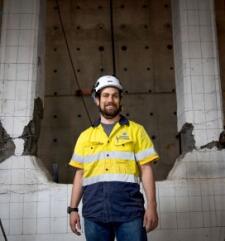 Hogan’s work has helped improve how earthquake risk is understood for buildings and bridges in Aotearoa, including informing changes to building guidance and practice. He has contributed research that supports safer design and strengthening decisions and has used the award to engage internationally on building guideline development.
"I was honoured to receive such a distinguished award, especially since I had the pleasure of meeting Ivan late in his life. The award allowed me to continue my participation in ACI code committees on seismic assessment and retrofit as well as disaster reconnaissance."
Through these activities I was able to both share the work conducted by NZ inc with an international audience and gather best practices and state-of-the-art understanding to help contribute to the development of the New Zealand seismic assessment and retrofit guidelines.”
Dr Shahab Ramhormozian, Senior Lecturer, Auckland University of Technology
2022 winner
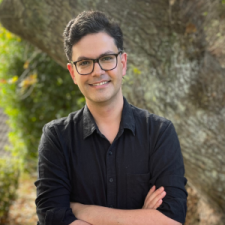 Dr Shahab Ramhormozian has advanced “low‑damage” earthquake engineering by improving a sliding hinge joint system designed to help buildings absorb shaking while reducing repair needs. His work has supported real-world uptake (including use in active building projects) and aims to help this kind of innovation be adopted more widely into building guidance and codes.
“The Ivan Skinner Award is one of the dearest awards I have had the pleasure to receive. Named after the eminent earthquake engineer Dr Ivan Skinner, and shared with past recipients who are also valued colleagues and mentors, it came at a pivotal point in my career and played a meaningful role in the success of a major research proposal in the field, that I was working on at the time.”
Dr Ashkan Hashemi, Senior Lecturer, University of Auckland
2021 winner
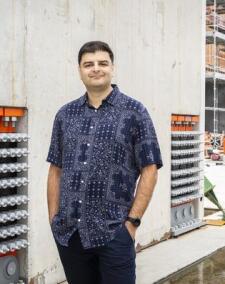 Dr Ashkan Hashemi is known for bridging the gap between research and real-world building design. His work has focused on practical, “low‑damage” seismic solutions and on developing methods and tools engineers can actually use. His Ivan Skinner Award recognised those research‑to‑practice outcomes and supported further industry education and uptake.
“Receiving the award was a great honour and supported me to continue bridging research and practice in earthquake engineering, while made me able to further disseminate the outcomes of my work.”
Professor Geoffrey Rodgers, Professor of Mechanical Engineering, University of Canterbury
2014 winner
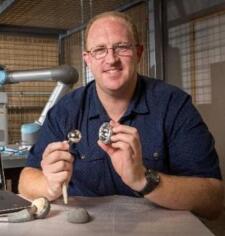 Professor Geoffrey Rodgers develops technologies that help buildings perform better in earthquakes, including energy‑dissipation (damping) devices and monitoring approaches. His work has progressed from modelling and testing to real-world deployment, with technology adopted in Christchurch rebuild projects (including Tūranga) and implemented internationally, supporting safer, more resilient building performance.
“It was a great honour to receive an award that recognises the outstanding achievements of Ivan Skinner. For an early-career researcher, the award serves as an important way of demonstrating recognition by the profession. Having this award on my CV helped to open many doors and enabled me to secure additional funding to undertake earthquake resilience research and advance my career. The award is both a recognition of an individual and a key method to leverage general science funding to be applied in earthquake engineering.”
Professor Alessandro Palermo, Professor of Structural Engineering, University of California (San Diego)
2013 winner
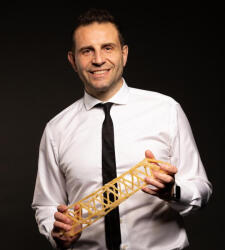 Professor Alessandro Palermo’s research focuses on resilient bridges and buildings, including low‑damage structural systems and materials. His design‑oriented work has led to real-world implementation—such as a low‑damage rocking bridge in Christchurch—and he has helped develop timber‑based construction approaches adopted in multiple buildings internationally, linking research innovation to practical resilience outcomes.
“Grateful to the NHC Toka Tū Ake for the Ivan Skinner Award; having met Ivan, I was inspired by his simplicity and out-of-the-box thinking. It meant a great deal to me after the Canterbury earthquakes, energizing me to think differently, as he did, alongside the outstanding and uniquely innovative New Zealand engineering industry. Today, I still look at the award in my University of California, San Diego (UCSD) office, it reminds me to keep evolving.”
Professor Brendon Bradley, Professor of Earthquake Engineering, University of Canterbury
2012 winner
 Professor Brendon Bradley is a leading earthquake engineer whose work improves how we understand and model earthquake shaking and what that means for buildings and infrastructure. His research supports better risk‑informed decisions for resilience, and he has held major leadership roles in New Zealand’s earthquake resilience research community, including as a co‑founder of QuakeCoRE.
“As long as NZSEE/NHC Toka Tū Ake maintain the highest standards in how this award is bestowed upon (requires focus every year on that purpose), then its primary benefit is acknowledging work of the highest calibre in the earthquake engineering field.”
Professor Rajesh Dhakal, Head of Civil & Environmental Engineering, University of Canterbury
2007 winner
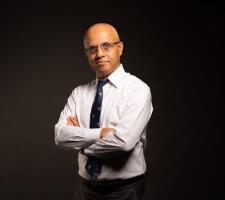 Professor Rajesh Dhakal is an internationally recognised leader in earthquake engineering. His work spans research, teaching, and sector leadership, including long-standing editorial leadership of the Bulletin of the New Zealand Society for Earthquake Engineering. He has contributed to advancing how buildings perform in earthquakes, with a strong emphasis on practical outcomes and professional impact.
“Receiving the Ivan Skinner Award in 2006 was a defining milestone that allowed me to build upon the legacy of excellence in earthquake engineering that Ivan himself championed. This recognition strongly endorsed my early-career research and provided the vital support and encouragement necessary to transition my research into practical, life-saving applications while opening doors to essential international collaborations.”