New retrofit solutions for old concrete buildings
You might assume that if a building is still standing after an earthquake, it has done its job. But engineers know that not all damage is obvious, and some older buildings can have hidden weaknesses that leave them vulnerable during future earthquakes.

One such weakness lies in something called a lap splice - a common method used to connect reinforcing steel bars inside concrete walls. While these connections were widely used in multi-storey buildings for decades, recent research has shown that, when located in critical areas of a structural wall, they can reduce a building's ability to withstand strong earthquake shaking.
Finding effective ways to address this problem is the focus of a Natural Hazards Commission Toka Tū Ake-funded research project led by Professor Santiago Pujol at the University of Canterbury. The project is investigating how existing concrete buildings can be strengthened and repaired, while also testing approaches being considered for future building design standards.
One of the researchers contributing to this work is Sirodom Somboon, a PhD candidate whose research focuses on practical retrofit solutions for older reinforced concrete buildings. Through a series of large-scale experiments, he is evaluating different strengthening techniques to understand which options provide the greatest improvements in safety, resilience, cost-effectiveness and ease of construction.
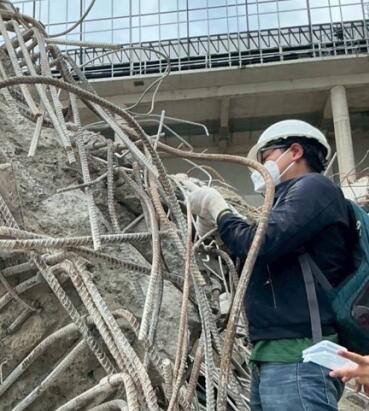 The findings could help engineers and building owners make better decisions about earthquake strengthening, resulting in less disruption and recovery costs following future earthquakes. The project also aims to produce guidance for practising engineers and inform future updates to building standards.
We interviewed Sirodom for our monthly NHC Toka Tū Ake Researcher Profile series. Read on to learn more about his research, what inspired him to pursue earthquake engineering, and his ambitions to bridge the gap between research and real-world practice.
What’s your project in a nutshell, and why is it important to New Zealand?
My NHC-funded research focuses on improving the earthquake performance of older reinforced concrete buildings that contain deficient lap splices in their structural walls. Many of these buildings were designed before modern seismic design requirements were introduced and may be vulnerable during strong earthquakes. The research aims to develop practical and effective retrofit techniques that improve the safety and resilience of these structures.
This is important for New Zealand because strengthening vulnerable buildings can reduce earthquake damage, protect communities, and support faster recovery after future seismic events.
What’s your favourite part of being a researcher?
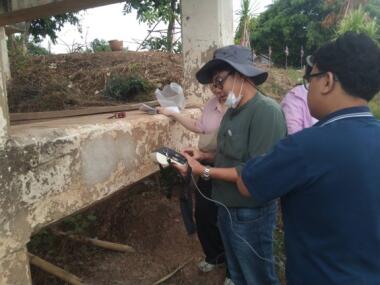 My favourite part of being a researcher is the opportunity to expand and apply my background knowledge in civil engineering to my specific interest in structural assessment and retrofit.
I also enjoy integrating my professional work experience into my academic studies, which helps me connect theory with real-world practice. In addition, research allows me to learn about new and innovative technologies, as well as gain different perspectives from an academic point of view.
This combination of practical and academic learning makes the work both meaningful and continuously engaging.
What sparked your interest in studying natural hazards?
My interest in studying natural hazards was sparked by the 2025 Mandalay earthquake. At the time, I was working as a civil engineer for a government agency and witnessed the devastating impact of the disaster firsthand. The earthquake caused widespread damage to buildings, including the collapse of a high-rise building that resulted in approximately 96 deaths and 9 injuries.
I was part of the investigation team responsible for assessing the site and collecting materials to determine the cause of the collapse. Through this work, I realised that many factors influence the strength and safety of buildings, including design, material properties, and construction quality.
This experience highlighted the importance of earthquake engineering and motivated me to pursue research in structural assessment and retrofit.
Why is it important to invest in natural hazards research like yours?
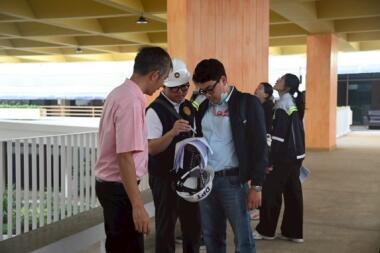 Investing in natural hazards research is essential because it directly contributes to reducing risk to lives, infrastructure, and the economy.
In countries like New Zealand, where earthquakes are a significant hazard, many existing buildings were constructed before modern seismic design standards and may not perform well during strong shaking.
My research focuses on developing practical and cost-effective retrofit solutions to improve the performance of these vulnerable structures. By translating engineering knowledge into implementable strategies, this work helps strengthen existing buildings, reduce potential damage, and support faster recovery after disasters, ultimately improving the resilience of communities.
Have you experienced the impacts of natural hazards first hand? How has it shaped your approach to research?
The Mandalay earthquake experience highlighted the importance of earthquake engineering and motivated me to pursue research focused on improving building safety and resilience through practical and cost-effective retrofit strategies to enhance structural performance.
What are your ambitions after your studies?
After completing my studies, my ambition is to continue working in the field of earthquake engineering with a focus on practical structural retrofit solutions. I aim to develop retrofit options and clear guidelines that can be used by construction companies and local contractors to upgrade the performance of existing structures.
These solutions should be adaptable to different budgets, skill levels, and functional requirements of buildings, while remaining safe and cost-effective.
Ultimately, I hope my work can bridge the gap between research and practice, making seismic strengthening more accessible and economically feasible in real-world applications.
What’s one finding from your research you wish more people knew about?
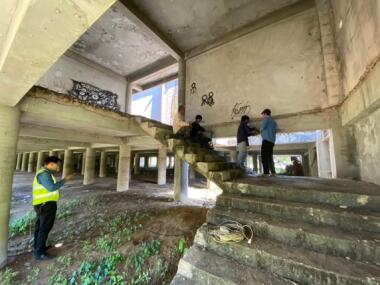 One key finding from my research that I wish more people knew is that there is no single retrofit solution for all buildings. Instead, there are multiple practical retrofit options that can be applied depending on a building’s function, target performance level, and constraints.
Contractors can select suitable methods based on their available skills, budget, and resources. In addition, understanding the efficiency and limitations of different retrofit techniques is essential for making informed decisions.
This comparative approach helps ensure that retrofit solutions are not only technically effective but also practical and achievable in real construction practice.
What do you like to do for fun outside of work/study?
Outside of work and study, I enjoy exploring a variety of cuisines as I am a food lover. I like trying different dishes and discovering new flavours whenever I have the opportunity. I also enjoy visiting exhibitions and museums, as they help me learn new ideas and gain inspiration outside my academic field.
In addition, I like exploring new places, which allows me to experience different environments and cultures. These activities help me relax, stay curious, and maintain a good balance between work and personal life.