Making room for nature – Researcher profile
For decades, we’ve relied on engineered solutions – like concrete barriers and stop banks – to protect us from storms and floods. But as the climate changes, could working with nature offer another way forward?
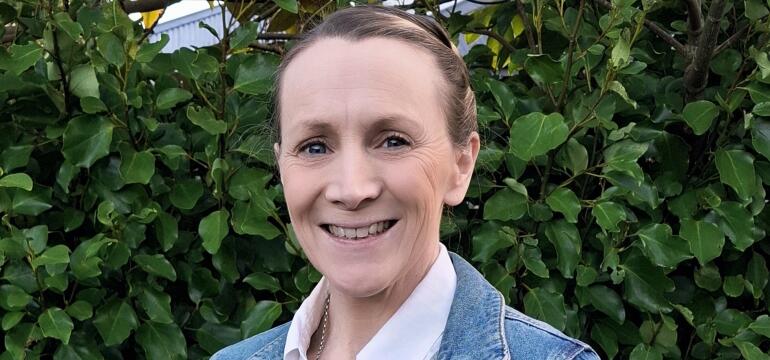
Caroline Rowe, a Research Fellow, from the University of Otago is exploring “nature-based solutions” – approaches that protect, manage or restore natural ecosystems to reduce natural hazard risk, such as reviving wetlands or building green corridors.
These solutions may be cheaper to maintain than engineered infrastructure, which are costing New Zealand $11 billion each year to maintain, according to a report from Tonkin + Taylor. They can have the added benefits of improving biodiversity, water quality and injecting more green spaces into urban centres.
 But Caroline, who has a background in communications, knows that community projects need community support to succeed. She’s leading research into what communities think about nature-based solutions, and what shapes support or resistance in different places. Her work will help councils, planners, and community groups have better conversations about nature-based solutions, grounded in what communities care about.
Caroline’s work is funded by NHC Toka Tū Ake-funded and overseen by Prof Caroline Orchiston, Director of the Centre for Sustainability Research at Otago.
We interviewed Caroline for our monthly NHC Toka Tū Ake Researcher Profile series. Read on to learn more about her research, what sparked her interest in natural hazards, and why good communication starts with listening.
What’s your NHC Toka Tū Ake-funded project in a nutshell, and why is it important to New Zealand?
In New Zealand we have often relied on engineered systems like stopbanks to protect us from flooding. These systems can be costly to maintain and, in some communities, their effectiveness is being challenged by our changing climate.
Nature-based solutions (NbS) like wetland restoration, river re-shaping, and green infrastructure offer an alternative. NbS can reduce risk while providing environmental and social benefits, but their success depends on public trust and support. Our research explores the narratives surrounding NbS for managing climate-related hazards such as flooding and sea-level rise.
We’re using two case studies in Otago and Southland to look at how NbS are communicated, what influences community support or resistance, and how engagement processes can be improved.
We want to identify ways to build trust and social licence for adaptation measures that help communities become more resilient to future natural hazards.
What sparked your interest in studying natural hazards?
I’ve got a background in communication and engagement, particularly in environmental and emergency management settings. Through that work, I’ve supported responses to several major disasters and seen first-hand the challenges communities face during and after these events.
What I valued most was being able to contribute to work that made a real difference for people. Research has given me the opportunity to continue supporting communities to be resilient, but in a different capacity. It allows me to look at how communities understand risk, how information can be communicated in ways that helps them make decisions and adapt to a changing climate.
Why is it important to invest in natural hazards research like yours?
Nature-based solutions have the potential to address multiple challenges at the same time, environmental, social, cultural, and economic. For example, restoring wetlands can help reduce flood risk downstream, while also supporting biodiversity, improving water quality, and restoring culturally significant landscapes and practices like mahinga kai.
If we want nature-based solutions to play a larger role in climate adaptation then it's important that we better understand not only how effective these approaches are in reducing risk, but also how communities perceive them. We need to understand how people weigh up their benefits and trade-offs, and how we can communicate these more effectively.
Have you experienced the impacts of natural hazards first hand? How has it shaped your approach to research?
I have been involved in responses to a number of natural disasters. I've seen first-hand the disruption these events can cause for individuals, families, and entire communities, often long after the immediate emergency has passed.
Those experiences have shaped my interest in research that helps reduce that risk before disasters occur. While response and recovery are critical, there is enormous value in understanding how we can help communities prepare, adapt, and become more resilient ahead of future events.
What is a misconception related to your research/field that you’d like to clear up?
Communication can often be seen as just a transfer of information from official, be that scientists, government, or council officials, to communities. Too often, it becomes one of the final steps in a project: the science has been completed, a plan has been developed, and then the community is asked what they think.
Effective communication is much more than that. It's an ongoing, interactive process that involves listening as much as speaking. It helps build relationships, trust, and a shared understanding of both the problem and the possible solutions.
When you view communication as a process, that also means the responsibility doesn't sit solely with councils, government agencies, or scientists. Communities also play a vital role by participating in conversations and helping shape the future they want. Good communication is something we do together.
What advice do you have for people who are interested in working with you/within your field?
Risk affects every one of us and our changing climate is regularly reminding us of how vulnerable we are to natural hazards. New Zealand is exposed to a number of different hazards, whether that’s geological, climatic, health, biosecurity so there’s huge variety in how you can support risk reduction through communication.
Whether you work in risk communication practice or research, to be able to help communities understand the risks in their environment and be proactive in reducing the impacts they may experience is incredibly rewarding work.
What do you like to do for fun outside of work/study?
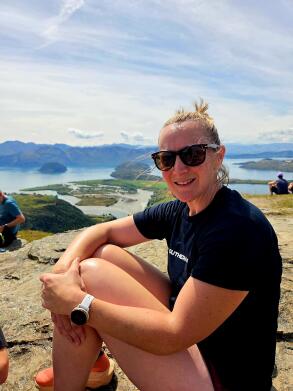
I have three children and we’re a pretty active family. I enjoy the outdoors, whether that’s running, skiing, tramping, or just being in my garden. We feel pretty lucky to live in Dunedin. There are so many beautiful beaches and wildlife but also so close to Central Otago and the Southern Alps. We’re spoilt for choice when it comes to getting out in nature!