Dr Lucy Kaiser: Front row seat to Aotearoa’s best stories
The Canterbury earthquakes shaped Dr Lucy Kaiser's career. Growing up in Ōtautahi Christchurch, she watched her iwi, Kāi Tahu, mobilise to support communities through the response and long recovery that followed.
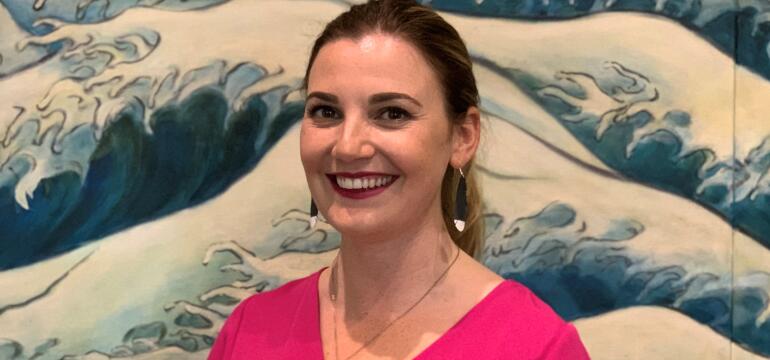
The experience showed her the strength, leadership and knowledge that already exists within Māori communities, and inspired her to pursue research focused on Indigenous approaches to disaster risk reduction.
Today, Lucy says one of her favourite things about being a researcher is getting a "front-row seat to the best stories in the country" by working alongside knowledge holders, community leaders and practitioners who are shaping how Aotearoa responds to future challenges.
Lucy is a Senior Māori Social Scientist at Earth Sciences New Zealand and Massey University, and Kaiwhakakaere of Te Toi Whakaruruhau o Aotearoa, the Mātauranga Māori Disaster Risk Reduction Centre (a partnership between Massey University and NHC Toka Tū Ake).
Lucy recently finished her PhD, which examined how Kāi Tahu ki Murihiku whānau experience and respond to climate change in Southland. Drawing on interviews with Kāi Tahu leaders, knowledge holders and practitioners, Lucy developed an Indigenous-led adaptation framework grounded in whakapapa, kaitiakitaka, and mokopuna-centred decision making.
Lucy's work highlights the importance of placing Indigenous authority and knowledge at the centre of climate adaptation planning.
Now that she's handed in her doctoral thesis, Lucy took a moment to catch her breath and talk to us for our NHC Toka Tū Ake Researcher Profile series.
Read on to learn more about the stories and experiences that shaped her research, the misconceptions she wants to challenge, and why communities often hold more knowledge and capability than they're given credit for.
What is your favourite part of being a researcher?
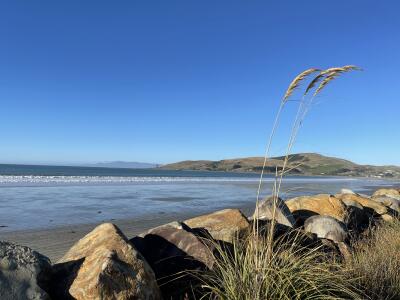 Honestly, it's getting a front-row seat to the best stories in the country. I get to sit with amazing leaders and knowledge holders and hear how their relationships with whenua shape real decisions about climate change, disaster risk reduction, and all sorts of important issues. I still don't quite believe that's my job.
Then I get to carry their kōrero, (meaning discussions and stories), into policy rooms that badly need to hear it. Sometimes that creates genuine change. It’s a job that never gets boring.
What sparked your interest in studying natural hazards?
The 2010 and 2011 Christchurch earthquakes shaped my interest in emergency management directly. I grew up in Ōtautahi Christchurch and watched our iwi Kāi Tahu mobilise to coordinate emergency response and carry the long recovery that followed.
That experience showed me how much capability already exists within our Māori communities, often unrecognised by mainstream systems. It pushed me toward research that places Indigenous knowledge and governance at the centre of disaster response. Climate change felt like a natural extension, since Kāi Tahu ki Murihiku are already experiencing the impacts of climate change, yet little had been written about it.
Why is it important to invest in natural hazards research like yours?
Aotearoa's disaster risk reduction system still leans heavily on Western technocratic models that treat whatever's measurable as whatever matters most. My research keeps showing how much that misses, the relational, spiritual and genealogical dimensions of risk that shape how Māori communities actually experience and respond to hazards.
Investing in Indigenous-led research means building tools and indicators like mauri, mahika kai and maramataka that sit right alongside the conventional metrics. Without that investment, we keep designing hazard and climate policy around half the picture, and the communities holding the deepest place-based knowledge stay locked out of decisions that directly affect them.
Have you experienced the impacts of natural hazards first hand? And if so, how has it shaped your approach to research?
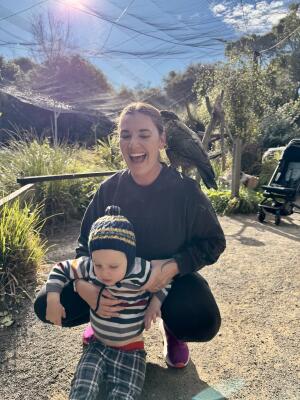 Yes. Living through the aftermath of the Christchurch earthquakes as a young adult showed me first hand how disaster disrupts daily life, and how quickly communities organise to support each other.
I watched whānau and marae step into roles that formal emergency systems were slow to fill. That experience shapes how I approach every project now. I start from the assumption that communities already hold expertise, and my role is to help that expertise gain recognition and resourcing within formal systems.
What’s one finding from your research that you wish more people knew about?
That adaptation mahi doesn't have to be this big, scary, overwhelming thing to start. A lot of the groundwork is already being done through kaitiakitaka. Whānau aren't starting from scratch. There's a whole wealth of incredible work already happening among Takata Whenua all over the motu that other communities could learn a huge amount from.
What is a misconception related to your research/field that you’d like to clear up?
A common misconception is that mātauraka Māori, Māori knowledge, simply adds local colour to Western science once the technical risk assessment is finished.
My research shows Māori knowledge systems offer complete frameworks for understanding hazard and risk, built over centuries of relationship with these landscapes. Treating that knowledge as an optional extra limits how much resilience work can achieve, and it excludes the communities best placed to lead adaptation.
I'd like more people to understand that Indigenous-led governance belongs at the foundation of resilience planning, shaping decisions from the outset.
Do you have a favourite anecdote or memory related to your research?
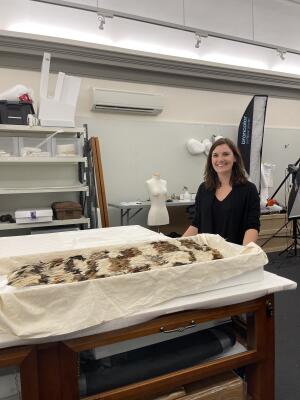 Aside from the huge privilege of spending time with each and every participant, it was the opportunity to connect more strongly to my tūrakawaewae and my whakapapa.
As part of this project I was able to see an ancestral cloak that had been locked away in a museum- that cloak became the central methodology of my research- Te Kahu Huruhuru o Kohikohi (the Cloak of Kohokohi).
What advice do you have for people who are interested in working with you/within your field?
Be brave, be humble, be kind, don’t lose hope! It’s easy to do in the face of everything being thrown at us, from climate change to policies and legislation that feels like it’s moving us backwards. I was lucky to have an amazing network of passionate and supportive people though Te Toi Whakaruruhau o Aotearoa who have inspired me to keep going over the last six years.
Read Lucy's full doctoral thesis(external link) – Massey University website