From good intentions to life-saving action
Most of us know there are things we could do to be better prepared for a natural hazard, from storing emergency water to securing heavy furniture or checking what’s covered under our insurance policies. We might even intend to do them. So why do those good intentions so often fail to turn into action?
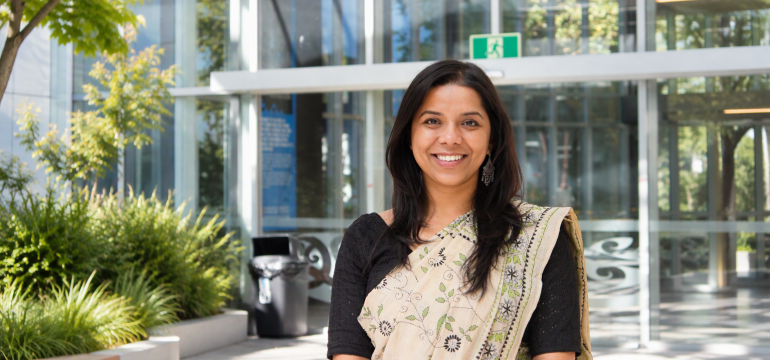
That question is at the heart of new research led by Manomita Das from Massey University’s Joint Centre for Disaster Research. Her NHC Toka Tū Ake-funded project is looking at what gets in the way of household preparedness, and what practical support could help people overcome those barriers.
Rather than focusing only on what motivates people to prepare, Manomita Das is examining what happens after someone has decided they want to take action. Her research will identify common barriers, explore what support people need, and then test promising approaches to see whether they actually help people become better prepared.
The findings could help NHC Toka Tū Ake and other organisations involved in public education and emergency management design initiatives that make it easier for people to take practical steps to reduce their risk. Ultimately, that could mean safer, better-prepared households and less damage when natural hazards occur.
The project was funded through a NHC Toka Tū Ake biennial grant and is already underway, with the research team developing its survey around behaviour change and testing preparedness actions including storing emergency water, reviewing insurance cover and securing heavy furniture.
For our latest Researcher Profile, Manomita Das talks about what drew her from computer science to disaster research, why understanding people is such an important part of natural hazard resilience, and the people and experiences that make research rewarding.
What is your NHC funded project, in a nutshell, and why is it important to New Zealand?
My project is on addressing the intention to action gap in disaster preparedness. New Zealand faces multiple natural hazards. But preparedness among people for the disruptions caused by these hazards remain low.
Research shows that people often do intend to prepare, but hurdles such as time constraints, cost, rules and restrictions get in the way.
This project aims to find the most common hurdles people face and identify how people can be helped to overcome them. For example, if someone is time poor, would a service that can be booked where someone comes to secure things to the wall help?
We expect this would give us some clear empirical data to inform interventions, policies and guidelines, so we can tackle the problem better with fit-for-purpose solutions.
What’s your favourite part of being a researcher?
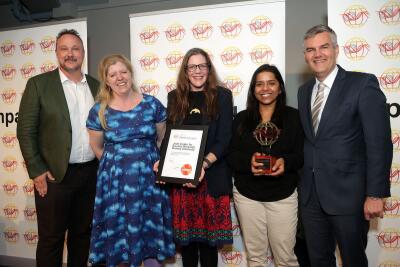 My favourite part is getting to read and learn interesting things and make a living out of it!
I really enjoy reading things that give me new ways to think about the world, and understand a bit better why people do what they do, and why things are the way they are. Being a researcher lets me chase some of these questions.
An added bonus is I get to travel to places I normally won’t go to, meet amazing people and hear about their lives and experiences. That’s a whole other way of learning about the world, which I could indulge in because of being a researcher.
What sparked your interest in studying natural hazards?
I actually started out as a computer science engineer. However, soon I found myself drawn to questions around social development, like how can we ensure food security for everyone?How can we make sure everyone has access to education, healthcare, and a better quality of life?
I found disasters interesting because a single earthquake can wipe out years of hard won developmental progress overnight, making us start from scratch again and it almost always hits the people with the least the hardest.
I strongly believe that good research can help us break that cycle and help us build a safer, fairer world for everyone. That is what sparked my interest in this field and keeps me going.
Why is it important to invest in natural hazards research like yours?
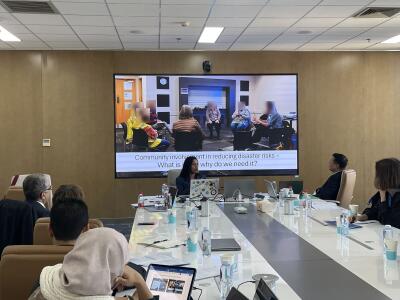 Because hazards are inevitable, but disasters are not. We cannot stop an earthquake, or a cyclone, but we can change how prepared we are when one arrives. And research, like ours, helps in that.
It helps us understand where the risks are, who is most likely to be hurt, what we can do beforehand and what actually helps people get through. Without it, we are somewhat guessing, and we can not afford to guess when people’s lives depend on it.
So, it is really important and essential that we encourage high quality research on natural hazards and invest in it.
Do you have a favourite memory related to your research?
It has to be the people I met. This one time, I was in a community meeting in a rural area, I picked up a book about the area that was on display and told the organizer I liked it. A few weeks later, it arrived in my letterbox.
That’s the kind of generosity I kept running into. People invited me for tea at their homes, met me on weekend evenings, because that was the only time I could make it, shared documents and maps so I can use them, there are many such incidents.
Being welcomed in like that, being trusted with personal stories is touching, I feel very fortunate to have had that opportunity.
What advice do you have for people who are interested in working in your field?
My biggest advice is try not to reinvent the wheel. Social science research on disasters is fascinating, and we need people with all kinds of expertise to help tackle some sticky problems, so if it sparks your interest, please come along!
But it also means that research is scattered across many disciplines and sometimes we miss what has already been done and head off on our own path, that is something we need to be cautious about. We have very few of us in this field, and funding is also limited, we need to make the most of it.
Some foundational work already exists, I would encourage everyone to build on it, test it, and push it forward so we can grow incrementally as a field.
What do you like to do for fun outside of work/study?
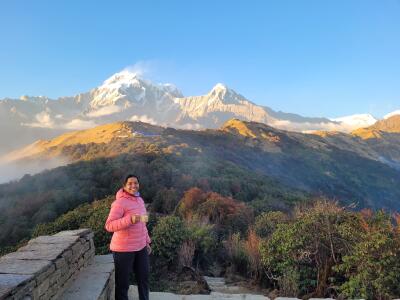 Outside work, I like to hike and walk, cloudy days are my favourite to walk around Wellington! I also like reading funny non-fiction, currently it is Tom Phillips’ Humans, a collection of humanity’s most creative failures.
The rest of my time goes into trying to grow some veggies, at the moment, coriander, on our balcony while fending off aphids, mealybugs and the Wellington wind. So far Team pest is winning by heavy margin, but I am convinced the next batch will make it!