Bringing earthquake research into everyday engineering practice
Engineering research can show how to make buildings safer in earthquakes. But for that knowledge to shape buildings across New Zealand, it needs to be translated into the standards and guidelines engineers use every day.
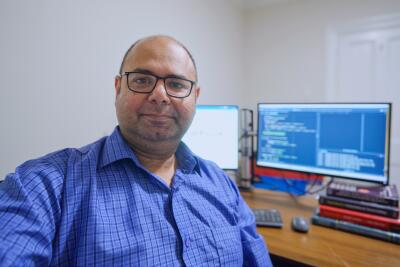
Dr Faraz Zaidi, a Research Fellow at the University of Auckland, is working at this crucial point between research and practice. His NHC Toka Tū Ake-funded project will help bring the best available evidence into updates the standards and guidelines engineers use in their everyday work.
Supported by Professor Ken Elwood (Chief Engineer, NHC and MBIE), Faraz is working with the groups responsible for updating this guidance, helping them find and use relevant research. Where there are questions that existing research can’t answer, he may carry out short studies himself. He’ll also identify bigger gaps where more research is needed.
By building research directly into the guidance engineers rely on, the project aims to turn new knowledge into practical changes in how New Zealand’s buildings are designed and assessed.
For our latest Researcher Profile, Faraz talks about what drew him to earthquake engineering, why connecting research with practice matters, and where he hopes his work will lead.
What is your NHC funded project, in a nutshell, and why is it important to New Zealand?
 My research aims to connect engineering research with the development of standards and guidelines, ensuring that research outcomes directly inform engineering practice and the building design community. I am assisting in updating the Earthquake Prone Buildings (EPB) methodology, the seismic assessment and retrofit guidelines, and revising other key building design standards.
My work involves identifying existing research that can address current standards and guidelines needs and translating it into usable forms for guidelines and standards committees, filling gaps through short-term studies to support guidelines and standards development, and identifying longer-term research studies required to support future standards and guidelines development.
The improved design of buildings to resist earthquake impacts, following the update of standards/guidelines, will reduce the impact of earthquakes on the built environment and, over time, improve its resilience to seismic hazards.
What’s your favourite part of being a researcher?
Being a researcher is extremely fulfilling, offering a far greater level of satisfaction than most other lines of work. The most rewarding aspect is the excitement of problem-solving—specifically, the opportunity to answer previously unanswered questions.
Then, the human element is important. Collaborating with other researchers is a joyful experience, too. Taking varied perspectives on the problem at hand broadens knowledge and understanding of the subject matter. At the end of the day, knowing that I can contribute towards making a real, positive difference in my area of research is deeply satisfying, and that is what keeps me so excited as a researcher.
How is your research helping make New Zealanders more resilient to natural hazards?
My research helps improve the building design standards/guidelines used for building design and assessment. In the short term, it contributes to updating design standards and conducting studies that will support future improvements to the standard.
Over the long term, the research will identify priority research needs to support continuous improvement in design and construction practices and retrofit strategies. Thus, directly contributing towards more resilient new buildings and the retrofitting of existing ones, thereby lowering the likelihood and severity of earthquake induced losses.
What sparked your interest in studying natural hazards?
In the initial years of my studies, I recall encountering a popular adage: “Earthquakes don’t kill people, buildings do.” I am a structural engineer by training. The statement above emphasises the immense responsibility structural engineers bear in designing a safer, more resilient built environment.
However, engineering buildings to perform well under seismic actions is a challenge and remains an evolving, dynamic field of study. The challenging and evolving nature of this research area makes it so exciting. Furthermore, it is deeply satisfying to contribute to a field where breakthroughs can have such a profoundly positive impact on society.
Why is it important to invest in natural hazards research like yours?
Natural hazards generally occur relatively infrequently. However, when they occur, the effects can be devastating and long-lasting, requiring huge efforts to rebuild. This is especially true for a relatively small country, where the effects are felt even more.
New Zealand sits on the so-called Pacific Ring of Fire, having a relatively high seismic hazard. Understanding the effects of earthquakes on the built environment is essential for better preparing for future earthquakes.
Investing in a better understanding of building performance in earthquakes, designing new buildings and retrofitting existing ones to be more resilient to future earthquakes, helps minimise potential excessive losses.
What are your ambitions for further research or career after your studies?
I would love to continue as a researcher working towards improving the resilience of the built environment to seismic hazards. In the future, I wish to see myself in a research role, contributing to a better understanding of building performance in earthquakes and improving it.
Another related research area of interest to me is seismic vulnerability and risk analysis. I would like to continue working towards better quantification of the impacts of seismic actions, leading to improvements in risk quantification and the reliability of risk analyses.
What do you like to do for fun outside of work/study?
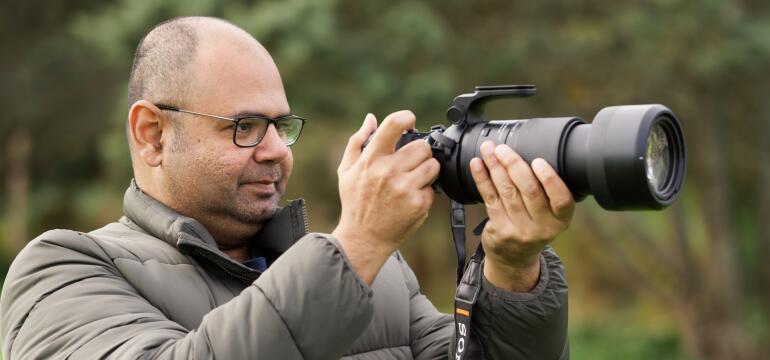
New Zealand is blessed with natural beauty and well-preserved flora and fauna. Outside of work, I like to spend time outdoors with my family. Also, whenever I can, I enjoy going out for some bird photography in and around Auckland. I find it immensely enjoyable and quite satisfying.
I like playing sports, especially Tennis and Cricket, and also do some occasional landscape and portrait painting.